Why are they addicted to virtual emotions in
romantic companion scripts?
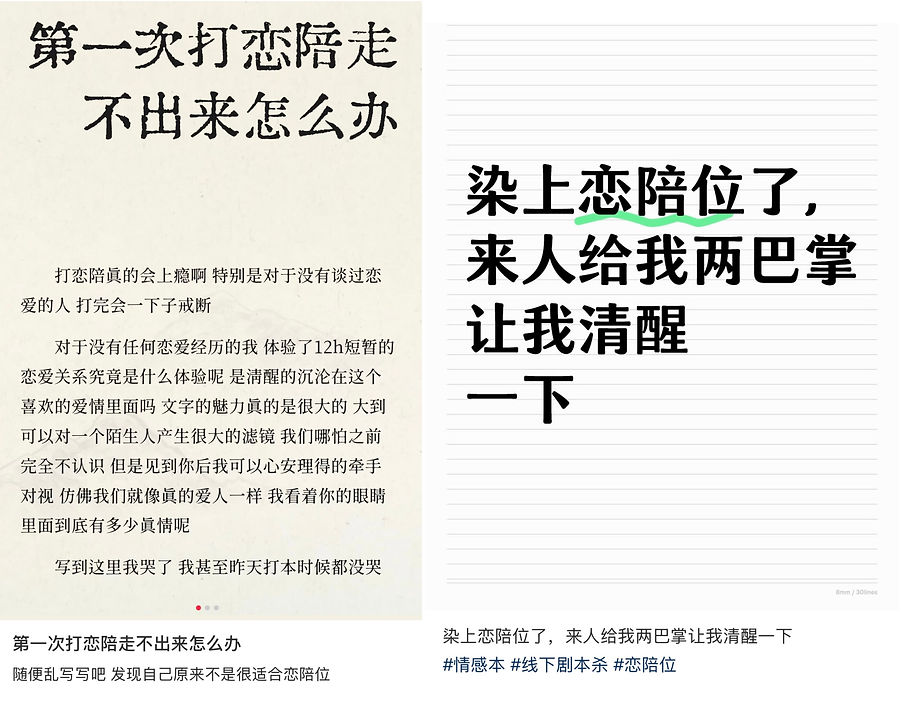
As the romantic companion script has grown in popularity since the second half of 2025, a number of players have struggled to distinguish between virtual romance and real life.
An exaggerated saying has gone viral on Chinese social media,“Get hooked on romantic - companion scripts, and you're doomed for life,” encapsulates the fierce debate sparked by the rise of romantic companion role-playing games.
Wen Hongbo said that those scripts can address the lack of three core psychological needs that young people repeatedly face in their difficult lives: a sense of competence, autonomy, and belonging.
“According to Maslow’s hierarchy of needs, belonging, esteem and self-actualization are young people’s core higher pursuits once their basic needs are fulfilled, but the isolated state of ‘social atomization’ often leaves them with a profound deficit in feelings of those needs, ” Wen said.

“Romantic companion scripts offer low-effort emotional success and high-intensity emotional connection through carefully crafted narrative techniques, breaking away from the slow process of ‘self-disclosure’, ‘seeking understanding’, and ‘establishing acceptance’ in real-world social interactions, which finally sparks ‘pseudo-self-actualization’ and a fictitious sense of superiority among players,” he added.
Wan said some of her friends love playing it because they’re under so much work pressure that they don't have the energy to maintain a real relationship.
“A 6 to 8-hour script on the weekend lets them experience a passionate love affair with a handsome DM and intimate physical interaction, enjoying the feeling of dating.” Wan said.
Wen said that the young people’s high-intensity schedules chronically overload the brain’s executive function, driving them to seek an “energy-saving mode” in their personal lives.
“Romantic companion scripts offer zero-maintenance pre-written intimacy that eases cognitive exhaustion,” he said. “Their fixed structure and predictable feedback also make players combat ‘learned helplessness’ caused by the pressures of real-life competition, building a virtual sense of competence and temporarily relieving frustrations in real life.”
During interviews, reporters found that the majority of players are women. Similar to other popular “love substitutes” that have emerged in recent years — including AI companions, otome games, tips on group live-streamings, and commissioned boyfriend services — when female consumers pay for this simulated romance, they are not simply consuming “male attractiveness”. Rather, they are seeking to experience loving and being loved, with low risk, in a relationship they can freely choose and control.
Wen said that women are socialized to hone stronger emotional expression and empathy skills, and more likely to define their self-worth through the quality of intimate relationships.
“More importantly, women in real life often serve as ‘caregivers’, leaving their own emotional needs unmet. Romantic companion scripts reverse this dynamic, letting women be the ones cared for and gain strong psychological compensation through targeted emotional nurturing,” he added.
Unlike players who focus solely on romantic companion roles, Yuan prefers NPC kinship roles, such as an older brother, sister or father figure companion.
To this day, Yuan still vividly remembers the scene from her favorite script Shuang Sheng. As her character’s sister was on the brink of death, the DM playing the sister knelt on one knee, held her hand, spoke her final parting words, and gently wiped away Yuan’s tears as she broke down.
“In real life, it’s extremely rare for someone to gently hold your hand and wipe away your tears when you’re breaking down under pressure,” Yuan said.
For Yuan, playing these scripts is an emotional release, not chasing virtual romance. “Even the companionship in family dramas allows me to immerse myself in another world for hours, releasing the stress of real life.”
Whether players are drawn to the romantic or familial bonds depicted in the stories, the emotional resonance these scenarios evoke often fosters players' deep attachment to the narrative.They always revisit the same script—either by reprising their original roles or by experiencing the same script from a new character’s perspective.
When talking about the reason for stepping back into the story again and again, Wan said at first she couldn’t accept the fact that someone so wonderful would die.
“Even though I knew the ending was tragic, just seeing him again and retracing the path of our first meeting brought me immense emotional fulfillment,” she said.
Through repeated plays, Wan has built a close, intuitive rapport with the DMs familiar with her. They tailor the extent of physical contact to her preferences, and improvise her desired lines during key plot moments.
She gave a specific example. When she took on the father-companion role in the script Seek Yourself, the DM she’d built a close rapport with deliberately wove a line from Liu Fang— another script they had played through together previously — into the final encore performance, forging a seamless emotional bond between the two stories.
“That one casual, unplanned line hit me with such a huge wave of emotion, I couldn’t hold back my tears for a second,” she said.
Wan said she is a slow-to-warm-up person, and she wants DMs to clearly discern her emotions to ensure a positive experience. Therefore, once she builds that rapport with a DM, she’ll keep coming back to them exclusively.
Ding Boyao, 22, a one year dedicated player, also likes to revisit her favorite scripts. “ It’s like being reborn in the story, and getting to live that bond with them one more time,” she said.
Ding has loved reading novels since childhood, and is fascinated by the chance to step into the pages of a story and experience extreme emotions and lives that are nearly impossible to access in real life.

Ding Boyao buys a wig, dioes her makeup by herself, and puts on the clothes provided by the store, ready to play the romantic companion role-playing game Youzhou.
On players’ repeated script playthroughs, Wen said plot twists and immersive performances in romantic companion scripts spike players’ cortisol and adrenaline, driving ongoing craving for narrative interaction.
Meanwhile, emotional climaxes trigger dopamine and oxytocin release, fostering strong attachment to characters and the DM. This may lead to cognitive bias, where players misattribute their intense physical and emotional arousal to real feelings for fictional characters, creating a deep role fixation.
“Unpredictable emotional beats in the plot also form "intermittent reinforcement", stimulating the brain’s reward system and ultimately leading to psychological dependence, even addiction,” he said.
Wen added that after a script ends, players return to mundane reality, their dopamine and oxytocin levels plummet, triggering intense emptiness and anxiety. To climb out of this emotional slump, they crave an “emotional recharge” by replaying scripts to recapture that emotional high.