DMs cross the legal and ethical line: romance scams and hidden prostitution in private one-on-one scenes
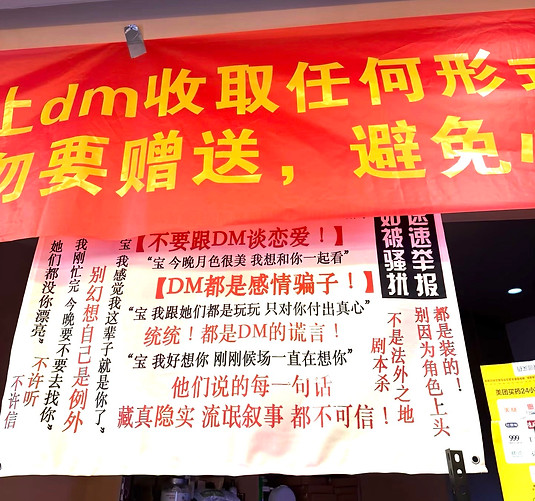
A script-killing game shop in Changsha posts a notice warning players not to fall in love with DMs, stating that they are emotional scammers, and encouraging players to report any harassment they encounter.
Some players are drawn to the characters in the scripts, not the DMs who portray them, but others project their feelings for the character entirely onto the DM themselves.
That blurring of fiction and real‑life relationships can leave emotionally vulnerable players at serious risk. Ava, 19, who has had depression, became one of the victims of this industry chaos.
Ava’s story began with the first romantic companion script, Hotbed, a script known for some soft porn content at the age of 18. Playing this script was her first social activity outside her home in more than six months, after she had struggled with severe depression and even resorted to self-harm.
Ava said she was in a state of extreme anxiety throughout the game, and the DM leading the session picked up on her emotional vulnerability. During the script’s penultimate private one-on-one scene (known as “black room”) segment Ava had an emotional breakdown from the plot and actively sought a hug. At that moment, the DM kissed her.
“There was absolutely no kissing scene written into the script. This was completely unauthorized action by the DM,,” Ava said.
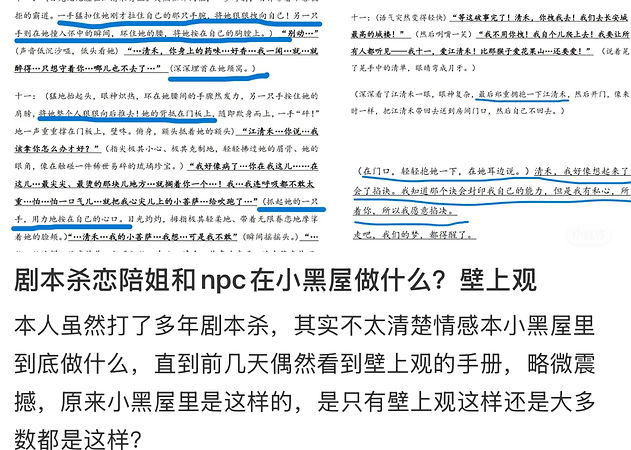
The “black room” is a mandatory interactive segment in every romantic companion script, where a player and DM enter a private room to advance their exclusive storyline. Sessions can last anywhere from 10 minutes to a full hour.
After the script ended, the DM stayed in touch with Ava under the pretense of booking future sessions and invited her out for drinks. Ava said even though she clearly told him she was on her period and could not drink, he pressured her to come anyway. After she had consumed alcohol, he had sex with her despite her explicit refusal.
They dated for roughly two months and Ava paid for every single expense. In total, she spent nearly 9,000 yuan on the DM, including a Valentine’s Day gift worth more than 1,000 yuan.
The day before she studied abroad in Australia, the DM confessed his love and wanted her to be his girlfriend, and did not want her to leave.
However, Ava finally discovered this was just an excuse the DM was using to keep taking advantage of her. The entire time he was dating her, the DM had still been living with his ex‑girlfriend, and she could read every single message between them.
With regard to the frequent boundary violations in romantic‑companion scripts’ privateone‑on‑one sessions, Lawyer Song Wenchao, said that paid physical contact or intimate interactions in such private settings can be treated as prostitution and solicitation with both parties facing administrative penalties.
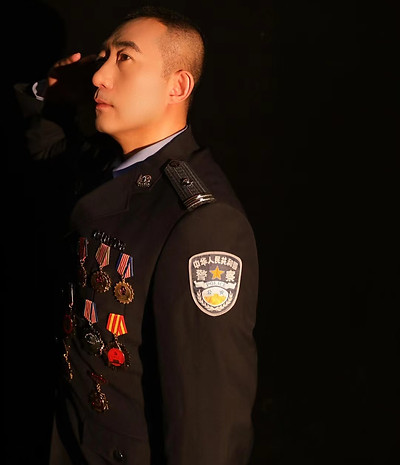
Lawyer Song used to be a police officer for 19 years.
Song said that there are still regulatory blind spots around such illegal transactions in this industry. On one hand, the romantic companion niche remains a relatively small segment, with a relatively low frequency of related illegal transactions. On the other hand, these interactions are highly covert. Neither the involved parties nor the venues will voluntarily report such incidents to public security authorities, creating significant objective barriers to regulatory oversight and investigation.
However, he said the cyber police divisions of China’s public security authorities can conduct routine screenings of chat logs and transaction records on social media platforms through keyword searches.
“Once a large volume of clues related to such activities emerges and the number of related cases reaches a certain scale, it will be formally incorporated into the daily work scope of cyber police,” Song said.
In recent years, various new gray-area paid service formats — including billiards teaching assistants, in-home private chefs, and travel companions — have quickly been brought under the regulatory purview of public security authorities, Song added.
“Even with the high level of covertness, illegal prostitutions linked to romantic companion scripts are by no means a ‘lawless zone’,” Song said.
Ava’s experience is far from an isolated incident. The industry has seen cases of emotional manipulation and large-scale romance scams, most notably the Beijing DM Shiwu 十五 fraud case that sent shockwaves in the community in early 2026.
In January 2026, a whistleblower 99-page PDF titled Beijing DM Shiwu Cheated on Partners and Defrauded Victims of 100,000 Yuan, spread widely across player communities on RedNote and WeChat groups. Victim Riky has already reported the incident to the police.
According to the PDF, Riky met Shiwu during a session where he played her romantic‑companion DM. The two then chatted on WeChat, having dinners, and quickly began a relationship. Riky has bipolar disorder and repeatedly asked Shiwu whether he was single, Each time he lied that he was unattached, and fabricated that he also suffered from bipolar disorder.
Shiwu repeatedly cheated money from Riky under the pretext of unpaid wages, rent, and daily living expenses. In total, Riky spent nearly 100,000 yuan on him, including giving him an iPhone 16 Pro and an iPhone 17 Pro Max. She almost covered all of their living costs, and even paid his compensation fees for sexually harassing other players.
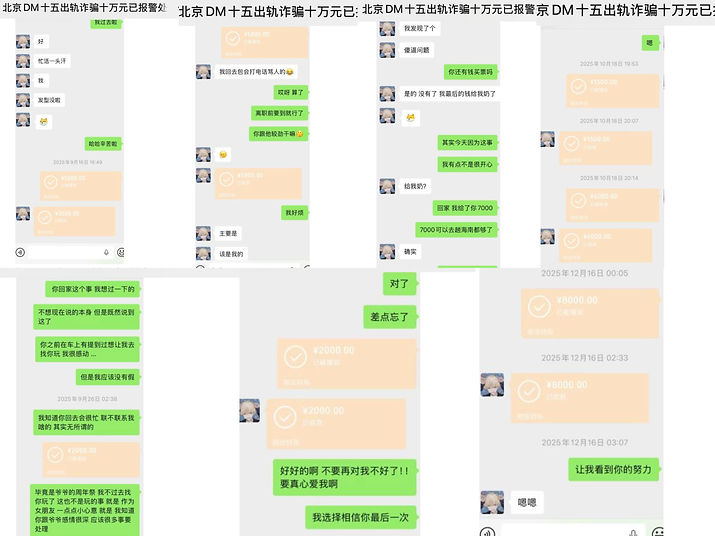
The victim provides screenshots of transfers made to DM15 in the PDF. However, none of these transfers contain explicit evidence that the man fabricated a specific reason to defraud the victim of money, which will make it difficult to secure a conviction in the subsequent proceedings, said the lawyer Song Wenchao.
Finally, Riky caught Shiwu cheating in the act, confirming that he had been in a relationship with a female DM named Xiaomian for a long time.
However, Xiaomian, Shiwu’s long-term live-in partner, was also a victim. According to a second PDF, the two began dating and living together in 2023. During the four-year relationship, Xiaomian almost covered all of their living expenses, spending a total of more than 300,000 yuan on Shiwu.
Shiwu repeatedly cheated on and physically abused Xiaomian, impregnated other women, and subjected her to long-term gaslighting and psychological control, even instigating her to “find a wealthy second-generation heir to support the both of them”. Even after the two broke up, Shiwu continued to defraud Xiaomian of money, according to the PDF.
Yang Zichen, the founder of the WeChat official account “Script-killing Game News—Might Disband Tomorrow,” who has reviewed hundreds of PDFs, shared the reason for the frequent emotional scams involving DMs he believed.
“DMs have a strong charismatic presence in the script. They may be a world-saving hero, a gentle and rich man or a devoted lover,” he said. “However, in reality, a DM’s income is completely mismatched with the glory they get on stage. Their own psychological gap drives them to constantly seek more value from players, which has spawned huge tips, gift solicitation, and even emotional fraud."
Following this case, another incident was exposed in player communities: another Beijing DM defrauded a woman of 240,000 yuan, and even maliciously transmitted syphilis to her.
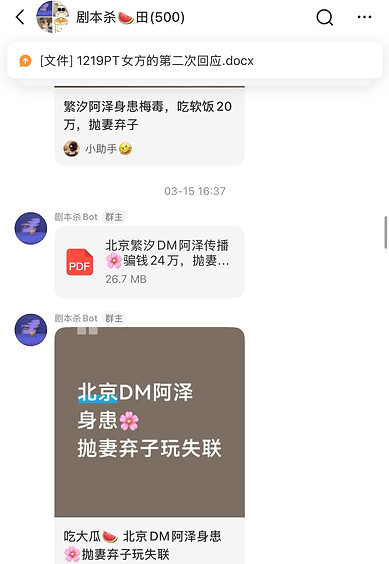
Apart from the WeChat official account, there are12 script-killing game gossip groups on RedNote, where PDFs exposing industry chaos, including affair, emotional scams, sexual harassment and economic disputes among players even involving minors, are posted roughly every few days.
Song said that fraud cases are often difficult to prosecute and take an amount of time to investigate. Furthermore, the thresholds for filing a case vary across different regions in China, ranging from 3,000 to 7,000 yuan in less developed areas to more developed ones.
“A determination of fraud cannot be made solely based on ‘dating’, ‘money transfers’, or ‘a fabricated identity’. Instead, it must meet all constitutive elements of the crime of fraud with sufficient evidence,” Song said.
Song said per Article 266 of the Criminal Law of the People’s Republic of China, the crime of fraud requires all four essential elements to be satisfied simultaneously:
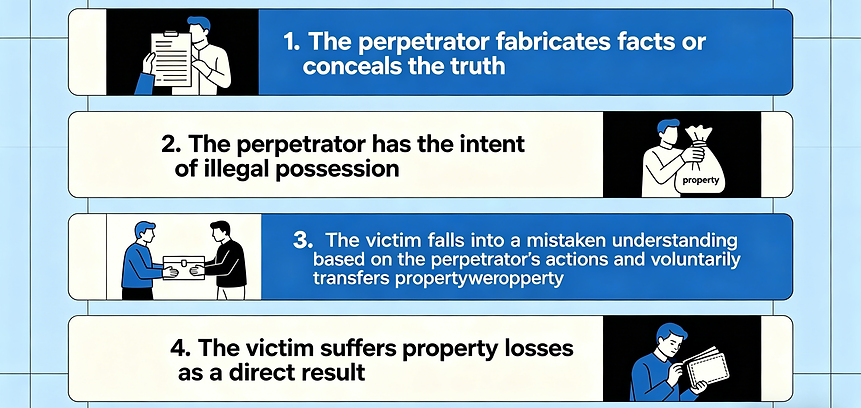
Song added the key to determining fraud lies in whether the reasons the perpetrator gave when asking for money were fabricated, and whether that fabrication had a direct causal link to the victim’s decision to hand over money.
However, satisfying this element requires substantial evidence, and victims often face difficulties in the burden of proof.Song advised victims to prioritize preserving WeChat chat logs, voice call recordings, transfer records, loan agreements, and all materials that can verify the perpetrator’s claims related to borrowing and money solicitation, and to promptly report the case to public security authorities.
“It is best to keep written or voice records of the specific fake reasons the DM gave when soliciting money or property,” he said. “Experienced scammers typically opt for voice calls to avoid leaving a written trail on WeChat.”
Proving the second element “intent of illegal possession” is also typically difficult and requires a comprehensive assessment based on the use of funds, whether repayment was made after the fact, whether the perpetrator engaged in borrowing from new lenders to repay old debts, squandered funds on gambling, and other relevant circumstances.
“If the transactions amount to everyday gifts and shared consumption in a romantic relationship, or if the victim was at least partly aware of what was happening, the conduct does not automatically constitute fraud,” he said.
“Such situations are easily blurred with emotional or economic disputes. Add the script‑murder industry’s blurring of fiction and reality, and victims’ payments are often seen as voluntary, making these among the hardest types of criminal cases to file,” he added.